


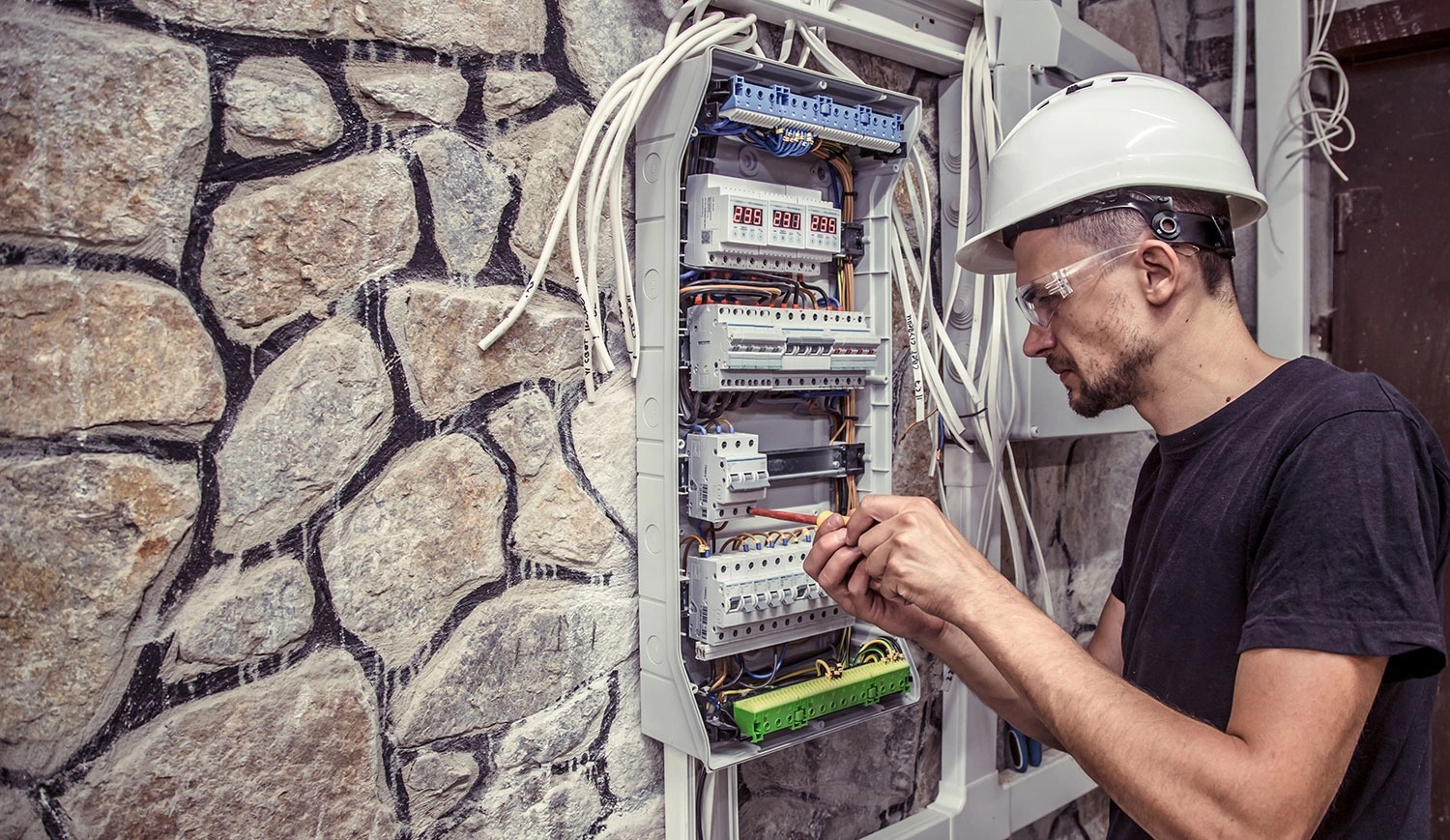
In France, anyone working on or near electrical installations must hold a valid habilitation électrique, or electrical authorization. This includes not only electricians but also non-electrical workers such as cleaners, painters, or subcontractors operating in areas where electrical hazards are present. The obligation is defined by the French Labor Code, specifically Article R4544-9, and governed in practice by the technical standard NF C 18-510.
Whether the task involves intervention, observation, or access, the law requires formal authorization issued by the employer, based on certified training and medical clearance.
What the Law Says: Who Must Be Authorized and Why
French Labor Code Article R4544-9 clearly states that no one is permitted to carry out work on or near an electrical installation unless they are properly authorized. This applies to electrical and non-electrical tasks, regardless of whether the installation is live or de-energized.
The accompanying standard NF C 18-510 expands on this by defining:
- Roles and responsibilities based on voltage levels and tasks
- Safety distances for proximity to live parts
- Symbols (B0, BR, H0V, H2, HC) that indicate the level of authorization
- Training content (theoretical and practical)
- Employer duties regarding training, documentation, and issuance
This legal framework reflects a safety-first logic: electrical risk does not depend solely on touching equipment; it includes entering or working near areas where electrical hazards exist. Cleaners working in transformer rooms, painters near power panels, or subcontractors on technical floors are all subject to this regulation.
Several training organizations offer targeted programs aligned with NF C 18-510. For example, 1formationSST.fr provides both low-voltage and high-voltage authorization training with clarity on symbols and their applications.
What Does Each Authorization Symbol Mean?
Each symbol defined under NF C 18-510 corresponds to specific types of tasks and levels of electrical proximity. Understanding these symbols is critical for both workers and employers when assigning duties.
Low Voltage Symbols (BT)
- B0: For non-electrical workers in low-voltage environments, restricted to areas outside reinforced proximity zones. No work on live parts permitted.
- H0 / H0V: Grants access to high-voltage premises without intervention. The “V” index indicates reinforced proximity conditions (e.g., approaching but not touching equipment).
- BR: For troubleshooting and minor interventions on low-voltage installations.
- BC: For personnel assigned to perform lockout/tagout operations at low voltage.
High Voltage Symbols (HTA/HTB)
- H1 / H1V: Permits high-voltage work under supervision. “V” indicates proximity work rights near live parts with specific controls.
- H2 / H2V: For supervisors who plan and oversee high-voltage work. Responsibilities include coordinating safety zones, documentation, and personnel assignments.
- HC: Assigned to workers responsible for securing lockout procedures on high-voltage equipment.
A key point is that holding a high-voltage authorization does not automatically authorize the worker for low-voltage tasks unless explicitly stated. Each scope must be clearly indicated on the written authorization.
A concise breakdown of low-voltage options, including H0B0, is available at 1formationSST.fr, which explains which path suits which type of worker.
How Close Can You Get to Live Equipment Before You Need Authorization?
NF C 18-510 defines approach distances that vary depending on voltage level and whether live parts are bare or insulated. These distances are structured into zones:
Low Voltage (BT)
- The reinforced proximity zone is generally within 30 cm of a live part.
- Non-electrical operations (such as cleaning or painting) are prohibited inside this zone unless proper authorization and protection are in place.
- Entry into areas closer than 30 cm requires role-appropriate authorization (e.g., BR or BC), the use of personal protective equipment (PPE), and site-specific controls such as delimitation and signage.
High Voltage (HTA / HTB)
- For voltages below 50 kV, the minimum distance from bare live parts is around 3 meters.
- For voltages of 50 kV or more, the minimum distance increases to 5 meters or more, depending on operator specifications.
Work within these zones is only allowed for personnel with proper symbols (e.g., H1V or H2V), accompanied by risk assessments, PPE, and supervision. Entry into a high-voltage area without the corresponding authorization can trigger legal liability for both the worker and employer.
What the Employer Must Do Before a Worker Is Authorized
The employer holds full responsibility for ensuring that any person exposed to electrical risk is legally and practically authorized. This includes direct employees, temporary workers, and subcontractors.
Here are the employer’s key duties:
- Risk Evaluation
The task must be analyzed for potential exposure to electrical hazards, including proximity, voltage level, and type of work. - Training
Training must comply with NF C 18-510, covering theoretical understanding of risks and practical simulations. - Medical Clearance
A company-designated occupational physician must certify that the worker is medically fit for the role and environment. - Issuing Authorization
The employer must issue a written document confirming the employee’s authorization. This includes:- An authorization card (habilitation title)
- A safety instruction booklet summarizing key protocols
- Documentation Control
Workers must carry their authorization documents on-site and update them when roles, risks, or job environments change.
The standard validity for authorization is typically three years, after which refresher training and reassessment are required. This is particularly important for mobile workers or those who operate on varied sites.
Are Temporary Workers and Subcontractors Also Subject to Authorization Rules?
Yes. Temporary workers are not exempt from authorization requirements. In fact, the law places the burden of authorization on the company directing the work, even if that worker is hired through an agency.
For temporary or subcontracted personnel, the assigning employer must:
- Verify completion of relevant NF C 18-510 training
- Confirm medical fitness documentation
- Issue a written authorization for the specific task and work environment
- Maintain records proving authorization was granted appropriately
Failing to properly authorize a temporary worker exposes the employer to legal penalties in case of inspection, incident, or injury.
What Happens If Work Cannot Be De-Energized?
Electrical work must be performed on de-energized installations whenever possible. If this is not feasible due to operational constraints, strict procedures are required.
This involves:
- Lockout and tagout procedures
Conducted by personnel with BC (for LV) or HC (for HV) authorizations. These individuals isolate the installation, verify the absence of voltage, and secure the work area. - Supervision
Supervised by workers with H2 or H2V symbols, who manage documentation, PPE requirements, and coordinate multiple trades. - Delimitation and PPE
The area must be clearly marked, insulated mats may be required, and all workers must use PPE suitable for the voltage domain.
Documentation such as lockout certificates and work authorizations must be retained and presented during audits or inspections.
What to Expect From Training and How It’s Funded
Training programs aligned with NF C 18-510 vary based on the level of authorization:
- H0B0 and B0: 1 to 2 days
- BR, BC: 2 to 3 days
- H1, H2, HC: Typically around 3.5 days
- Refresher courses: 1 to 2 days, depending on role and last authorization date
Courses are delivered by Qualiopi-certified providers and may be offered in-person, online, or in hybrid formats. Employers can fund the training through:
- OPCO (professional training funds)
- France Travail (formerly Pôle Emploi)
- DIF/CPF (for individual workers)
Centers like 1formationSST.fr offer detailed breakdowns of course durations, refresher needs, and financing pathways tailored to both companies and job seekers.
Frequently Asked Questions
Can I carry out electrical work myself on a professional site?
No. Even for minor or supervised tasks, you must hold the appropriate electrical authorization. The only exception applies to domestic, non-professional DIY work, which is subject to NF C 15-100 design rules, not NF C 18-510 authorization rules.
Can non-electricians approach low-voltage panels?
Non-electricians holding a B0 authorization may enter designated areas but must remain outside the reinforced proximity zone, typically beyond 30 cm of any exposed live parts. Supervision and PPE may still be required depending on the environment.
Are high-voltage authorizations valid for low-voltage work?
No. Authorization is domain-specific. If you are authorized for HV but not explicitly for LV, you are not permitted to work on or near low-voltage equipment unless your card states so.
Who issues the authorization for a temporary worker?
The employer managing the assignment, not the staffing agency, must issue the authorization. This includes validating training, verifying medical clearance, and defining the scope of work.
